
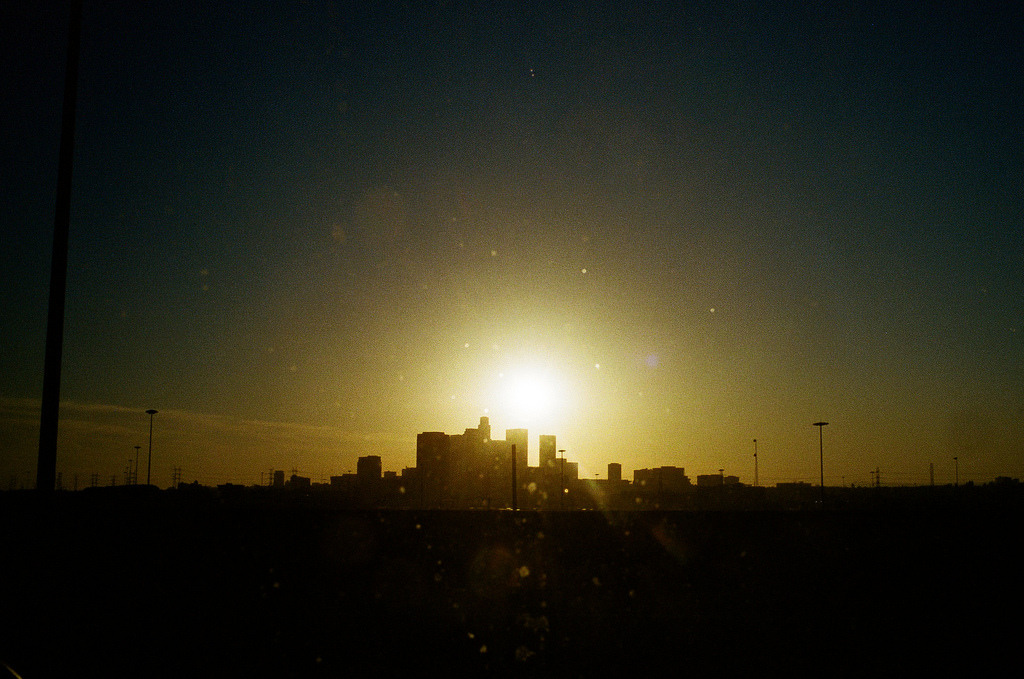
09.04.14 Downtown LA.
“By 1920, [Los Angeles’s] private and municipal rail lines were the most far-flung and most comprehensive in the world in mileage, even besting that of New York City. By this time, a steady influx of residents and aggressive land developers had transformed the city into a large metropolitan area, with Downtown LA at its center. Rail lines connected four counties with over 1,100 miles (1,800 km) of track…
…Following World War II, suburbanization, the development of the Los Angeles freeway network, and subsequently, increased automobile ownership led to decreased investment downtown. Many corporate headquarters slowly dispersed to new suburbs or fell to mergers and acquisitions. The once-wealthy Bunker Hill neighborhood became a haven for low-income renters, its stately Victorian mansions turned into flophouses. From about 1930 onward, numerous very old and historic buildings in the Plaza area were demolished to make way for street-level parking lots, the high demand for parking making this more profitable than any other option that might have allowed preservation. The drastic reduction in the number of residents in the area further reduced the viability of streetfront businesses that would be able to attract pedestrians. For most Angelenos, downtown became a drive-in-drive-out destination as they would come into the area for a particular objective and then leave immediately once their business was completed…
…The 2000 U.S. census found that just 27,849 residents lived in the 5.84 square miles of Downtown. The population increased to 34,811 by 2008, according to city estimates. As of 2014 the population of the district had grown to 52,400 residents, and 5200 residential units were under construction. The median age for residents was 39, considered old for the city and the county.” – Wikipedia



 Derek Woods Photography